Pictures of Rottweiler Puppy with Elbow Dysplasia
Redwood's Krest's Rottweiler Basra AKC# WS41855004
This gallery documents the visual progression of elbow dysplasia and forelimb lameness in Basra. Pay close attention to the foot positioning ("east-west" paws pointing outward), the bear-like large paw size, elbow swelling, and the gait observations from behind. Click on any image to open the high-resolution lightbox viewer.
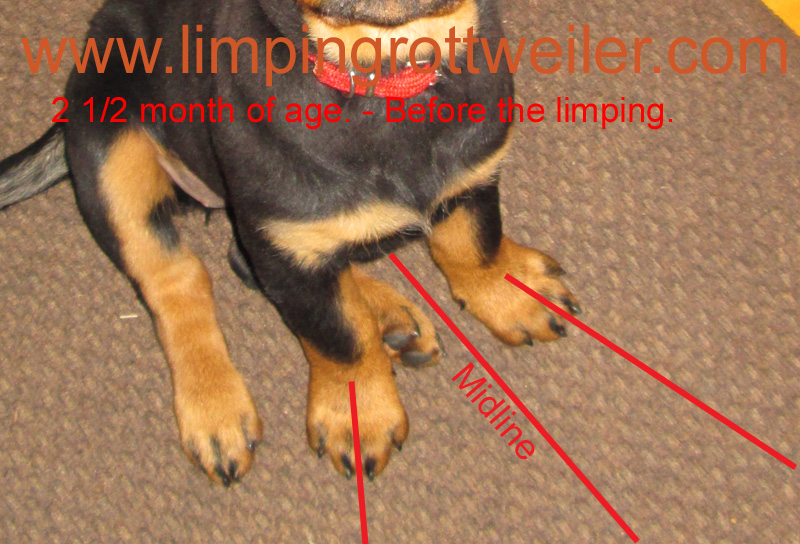
Here is how the front legs look at 2 1/2 months. A Rottweiler puppy that will develop severe elbow dysplasia on his front legs. The puppy seems to be very happy and healthy. At a young age it is difficult to notice any problem, but as the puppy grows, it becomes more noticeable that the paws are turning outward, "east-west" feet. Paw size is proportionally too large, but there's no way to confirm if size alone is a reliable future indicator.
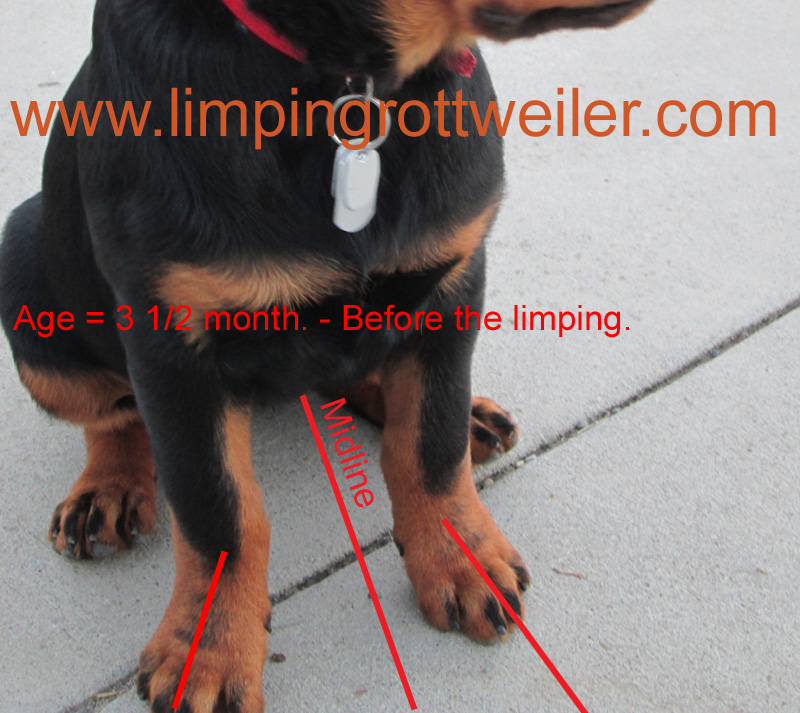
Rottweiler puppy at 3 1/2 months. Look at the front right leg of this puppy. It is very noticeable that the paw is turning outward, "east-west" feet. Paw size proportionally reminds of a small bear. When observing the dog's movement, it may occasionally seem normal (cat-like forward positioning), but many times it looks wrong. With good legs, it should never look bad. At this point, the puppy may start experiencing pain and whimpering from discomfort, or growling when touched at the shoulder.
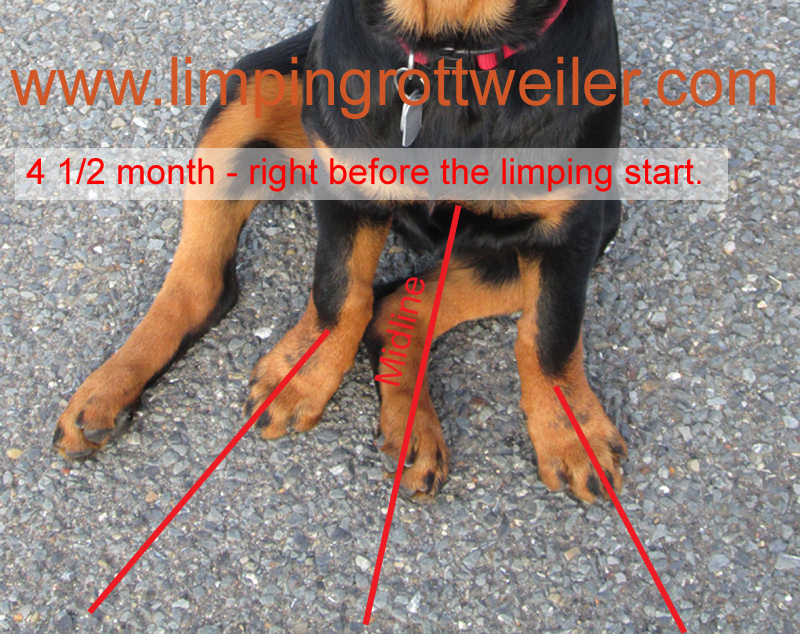
At 4 1/2 months, the Rottweiler puppy develops severe elbow dysplasia. At this point, there is still no limping present, but in every position it is very noticeable that the paws point outward. At this point, the puppy is experiencing pain. Feet are arching down.
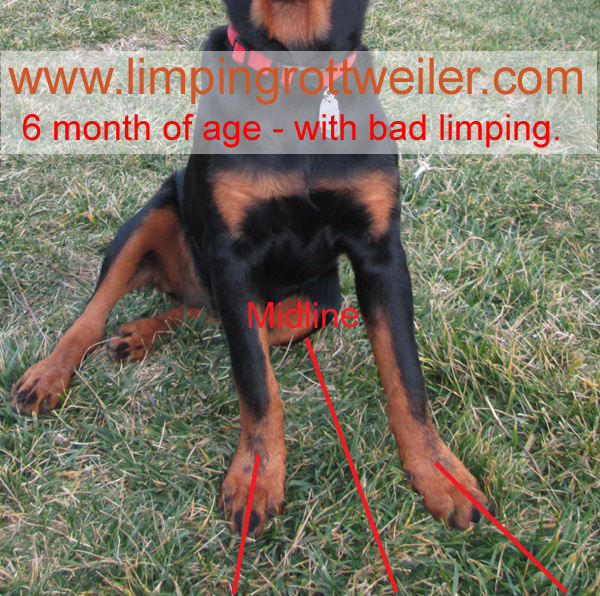
Rottweiler puppy at 6 months old. The puppy may have on-and-off limping. Look at these big feet. Feet and legs posture should look more like legs of a cat, not like a duck.
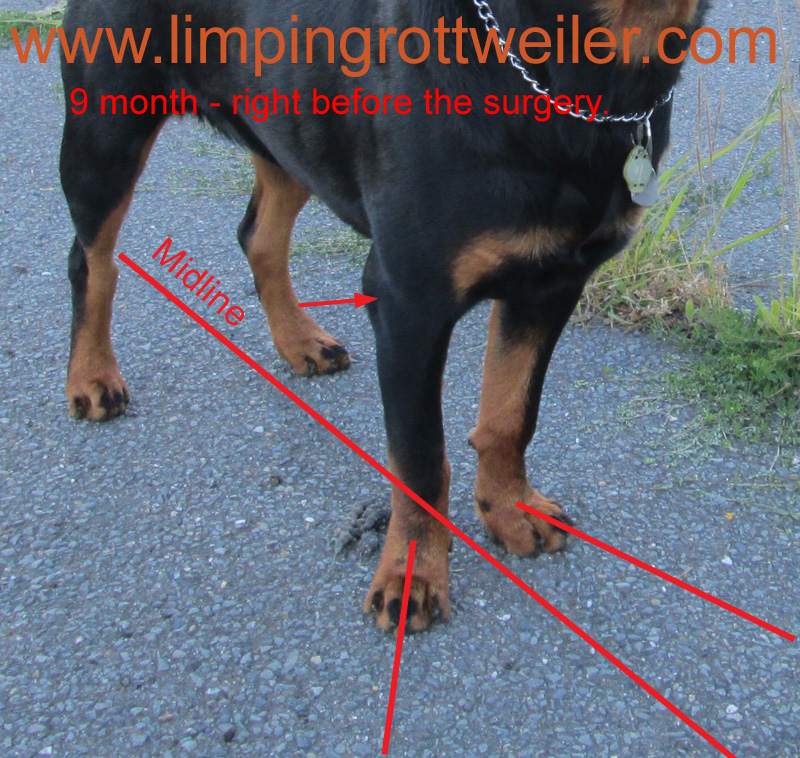
At 9 months old. Puppy is limping most of the time. Feet are pointing out at all times. It is difficult to see in this picture, but you can notice some swelling at the elbow. The correct leg, foot, and paw posture should be more like a cat, not like a duck.
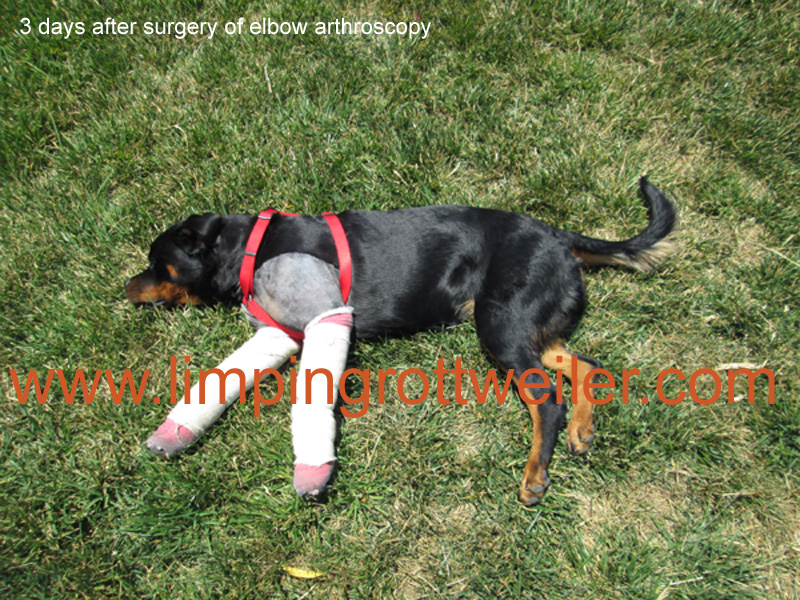
At 10 months old. 3 days after bilateral elbow dysplasia surgery.
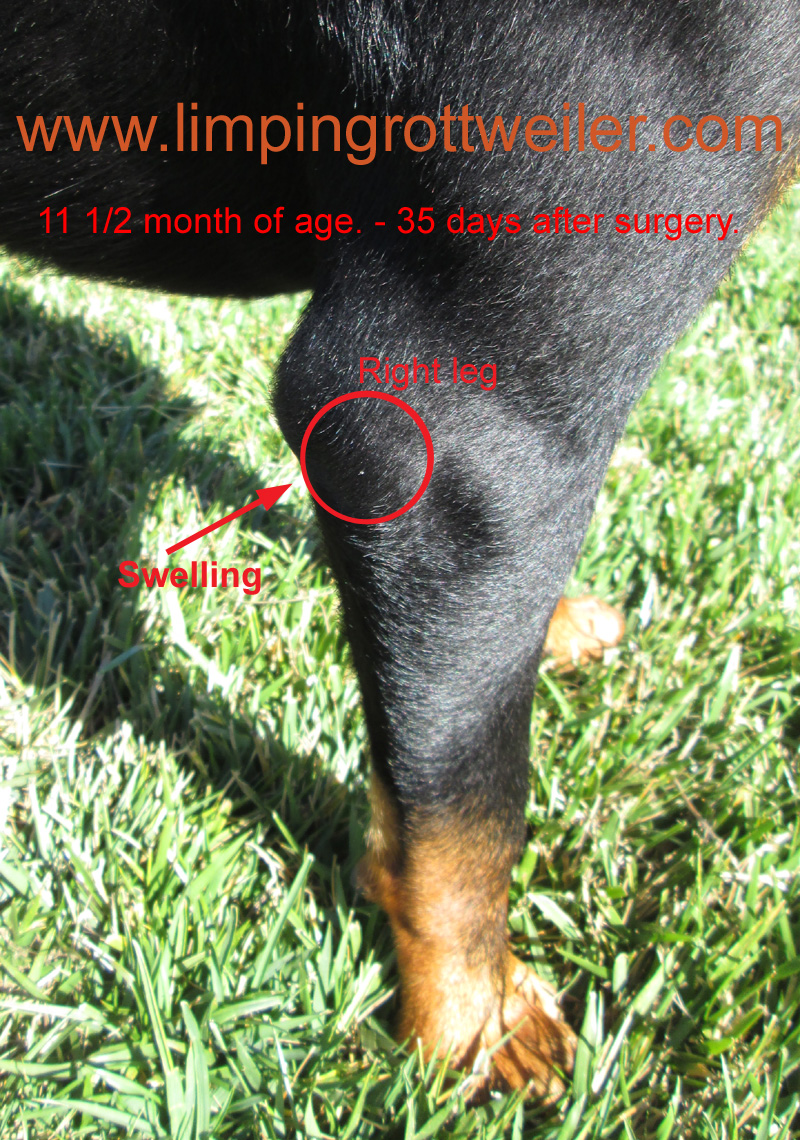
At 11 1/2 months old, 35 days after the bilateral elbow dysplasia surgery. Though difficult to capture in a photo, you can notice the swelling at the side of the elbow (posterior lateral section).
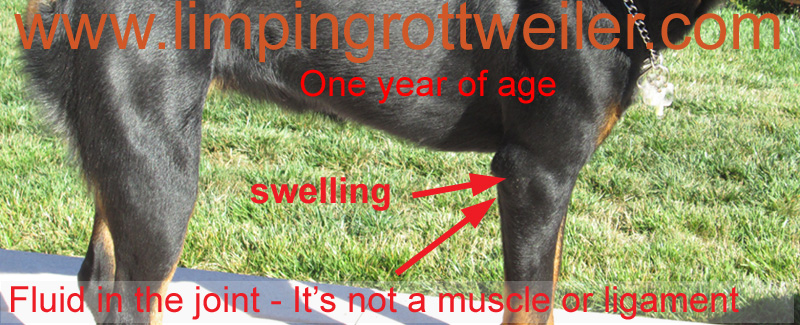
One year of age. Swelling at the elbow joint is visible.
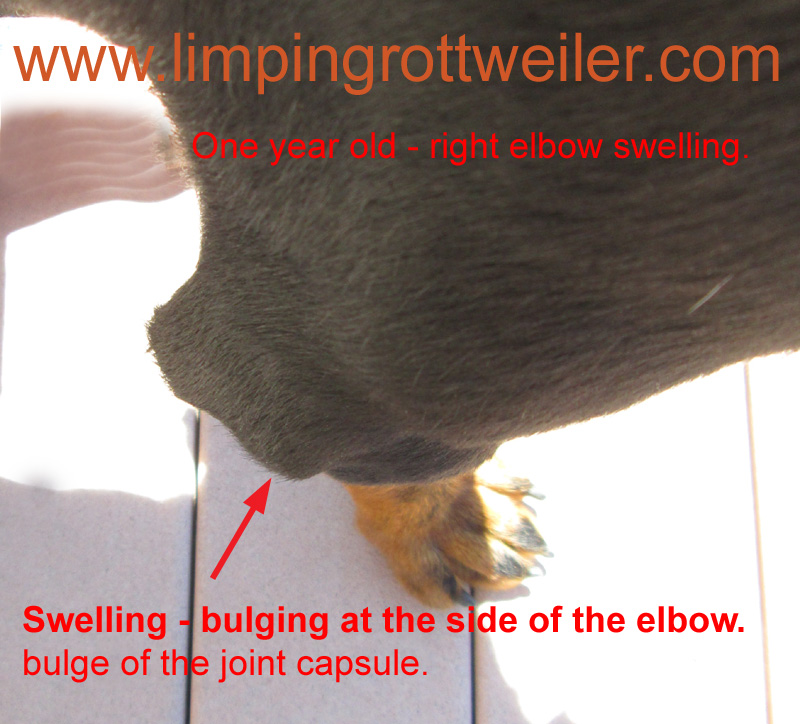
One year of age. Two months after the surgery. Noticeable swelling at the elbow joint.
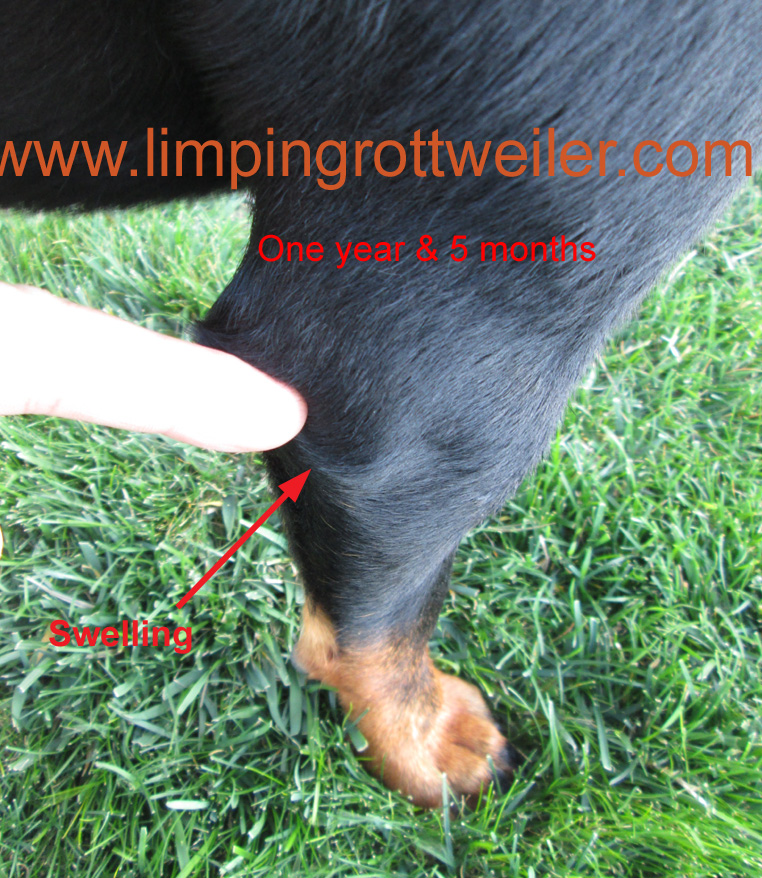
One year and 5 months. This is a better picture showing the exact location of the swelling at the side and back section of the elbow (posterior lateral).
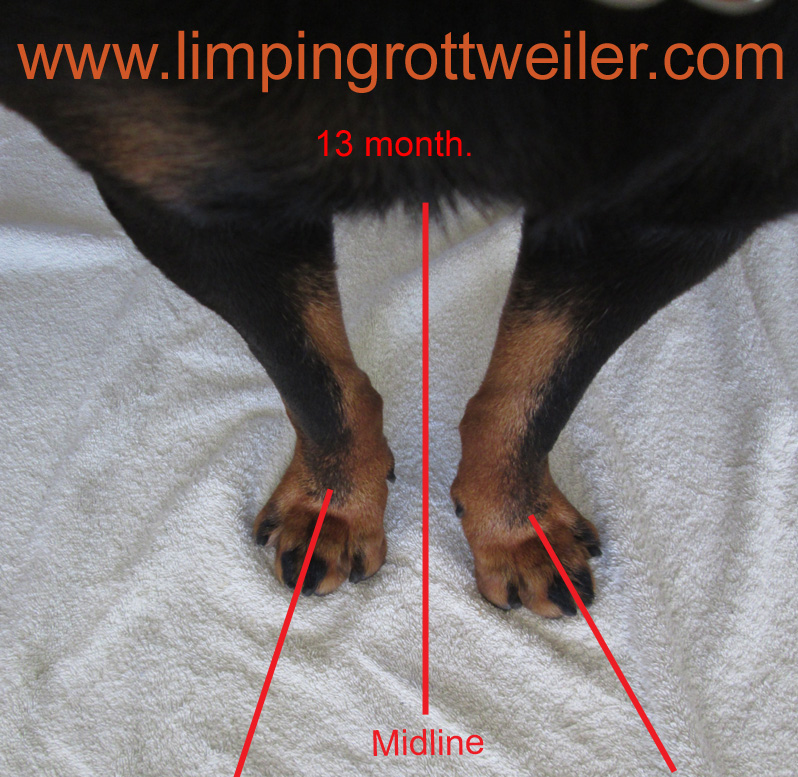
13 months of age. Legs are pointing outward. Proportionally, paws are huge and feet are sagging or arching down.
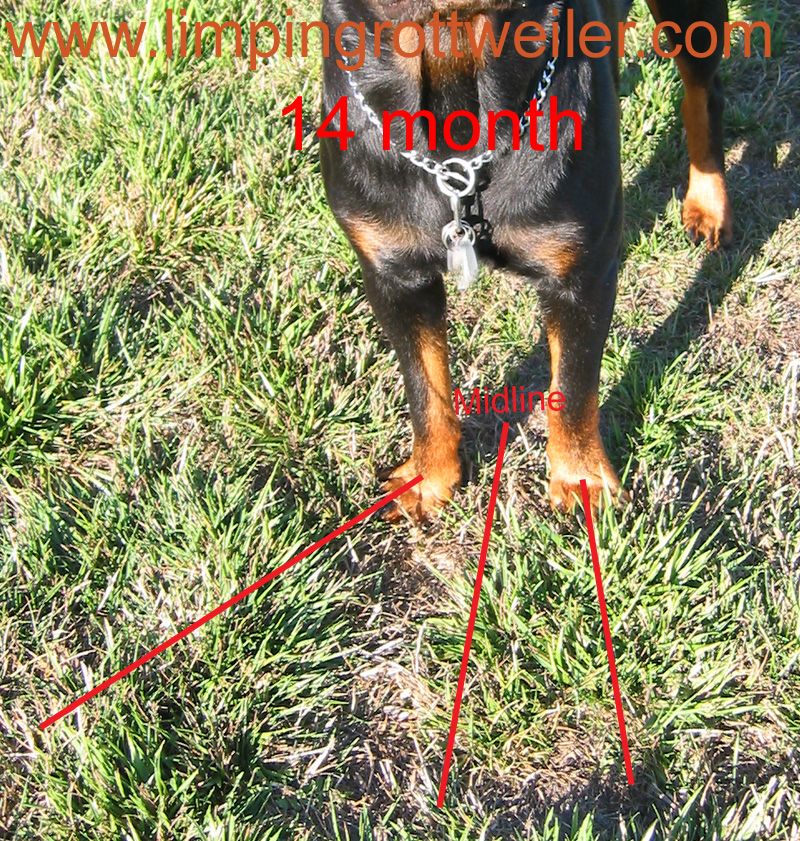
14 months of age - here at the best possible leg position. Legs are still pointing outward. Feet are sagging or arching down, looking more like a big duck than a big cat.
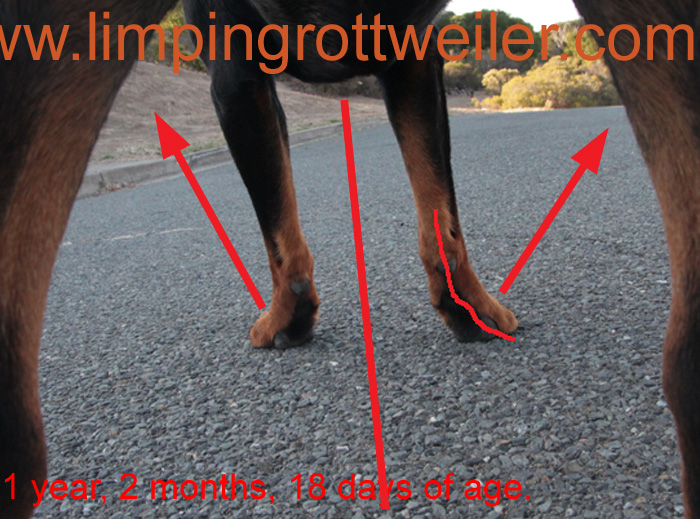
Rottweiler - View from the back. Feet are sagging or arching down.
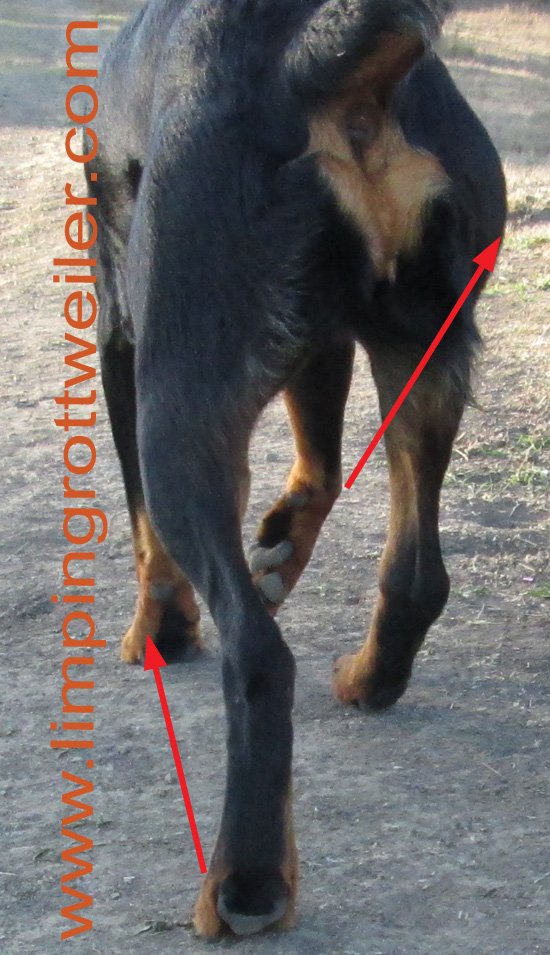
View from the back. The wrist is bending sideways instead of parallel to the midline or direction of the walk. The paw also twists in the air. This sideways movement causes balance issues, tripping, and unstable footing.
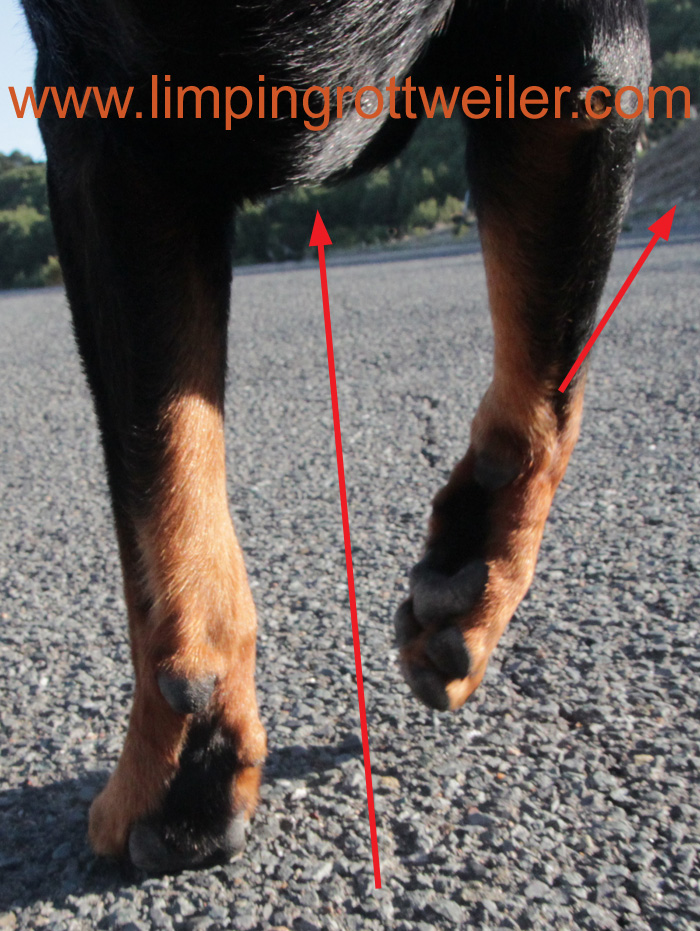
View from the back. Another example of the wrist pulling and bending sideways in walking and running. The paw should not twist in a healthy dog.
Slow Motion Gait Video
The best angle to observe how the wrist is bending is by walking behind the dog. In a dog with a strong, healthy posture, the wrist bending will be parallel to the midline, rather than twisting outward.
Slow Motion Walking - Rottweiler with Elbow Dysplasia (Basra)